Spitalgate (Grantham) Airfield History
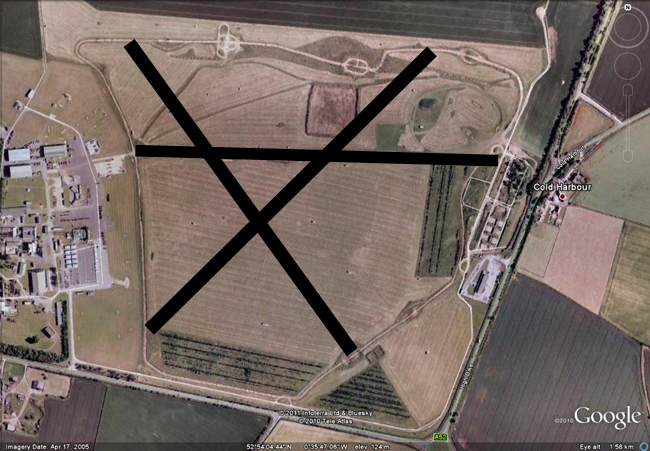
(Map edited to show runways)
© Crown Copyright/MOD 2010
52°54'05.0"N 0°36'0.15"WRunways:
?
Located just east of Grantham off the A52, the airfield was called Spittlegate in WWII with the alternative spelling of Spitalgate being mistakenly used when the site reverted to its original name towards the end of WWII. During WWI, a training aerodrome was constructed on the site, which remained active until 1920. It opened two years later and in 1928 received the name RAF Station Grantham. The site was involved with training and it was in this role that it entered WWII, with No.12 Service Flying Training School (SFTS) based there since its formation on 1st December 1938.
In April 1942, the school was renamed No.12 (P) AFU and it operated a large number of Blenheim and a lesser number of Ansons and Oxfords. In March 1943, 1536 BAT Flight formed at the airfield and saw out the European War, disbanding in May 1945. Between March and August 1944, 1544 (P) AFU operated from Grantham. Towards the end of that year, No.12 (P) AFU moved to Hixon, Staffordshire. The Communications Flight of 7 (Training) Group Bomber Command arrived in March 1945 and the following May, No.17 SFTS, the last training unit of WWII arrived, staying until 1948.
Grantham was always a grass airfield, although two of the three runways were covered in Sommerfeld tracking. The buildings had undergone numerous changes since 1920, being completely rebuilt between 1925 and 1927. Further development continued and by 1944, it had nineteen hangars of various types. Today the site is owned by the Army who acquired it in 1975, when RAF training at the airfield ceased.
| Date | Squadron | Notes |
|---|---|---|
| 1916 | Station opened as Grantham Aerodrome. | |
| November 1916 | No.49 Sqn RFC | Operating the Avro 504. Left Spitalgate in September 1917. |
| September 1917 | No.37 Sqn RFC | Operating the Avro 504. Left Spitalgate in August 1918. |
| November 1917 | No.50 Sqn RFC | Operating Avro 504. Left Spitalgate in July 1918. |
| February 1919 | No.70 Sqn | Operating the Sopwith Camel/Snipe. Squadron disbanded in January 1920. |
| September 1919 | No.43 Sqn | Squadron disbanded in December 1919. |
| February 1922 | No.100 Sqn | Operating the Vickers Vimy & Avro 504. Left Spitalgate in May 1924. |
| February 1923 | No.39 Sqn | Operating the Airco DH.9. Left Spitalgate in January 1928. |
| July 1924 | No.100 Sqn | Operating the Hawker Horsley and Fairey Fawn. Left Spitalgate in January 1928. |
| April 1928 | No.3 FTS | Operating the Tiger Moth. The Flying Training School left Spitalgate in September 1937. |
| August 1937 | No.113 Sqn | Operating the Hawker Hind. Left Spitalgate in April 1938. |
| September 1937 | No.211 Sqn | Operating the Hawker Hind. Left Spitalgate in April 1938. |
| November 1943 | Grass runways replaced. Finished in February 1944. | |
| March 1944 | Station officially named RAF Spitalgate (Grantham). | |
| September 1944 | No.12 AFU | The Advanced Flying Unit left Spitalgate in February 1945. |
| September 1949 | Mess School | The Mess Staff School left Spitalgate in August 1957. |
| 1955 | Central Library | The RAF Central Library left Spitalgate in 1958. |
| September 1955 | No.644 VGS | The Volunteer Gliding School left Spitalgate in January 1975. |
| October 1956 | No.2 GC | The Gliding Centre left Spitalgate in August 1971. |
| 1960 | WRAF Depot | The WRAF Training Depot left Spitalgate in March 1974. |
| 1975 | RAF Spitalgate closed and ownership transferred to the British Army. |

